Natural Light Fashion / Beauty Photography
Natural lighting tin can either exist your best friend or worst enemy in a product photography shoot. Blast it, and the results will speak for themselves. Go it wrong, and no corporeality of editing can save a photo from poor lighting.
Lighting and camera settings determine the outcome of the entire shoot before it'southward even started, and then a solid understanding of the basics of lighting will help you achieve amazing product photos that you tin can apply throughout your website and marketing efforts.
For most merchants, information technology's unlikely you'll have access to a photography studio and all of the equipment needed to shoot professional person product photos. So in this post, we're going to look at how you lot can master DIY natural lighting, and create beautiful photos using either a smartphone or professional-grade camera.

Shopify University Course: Production Photography
Photographer Jeff Delacruz shares how you can create your own photograph studio and take beautiful product photos for less than $50.
Enroll for free
1. Find the right lighting weather condition
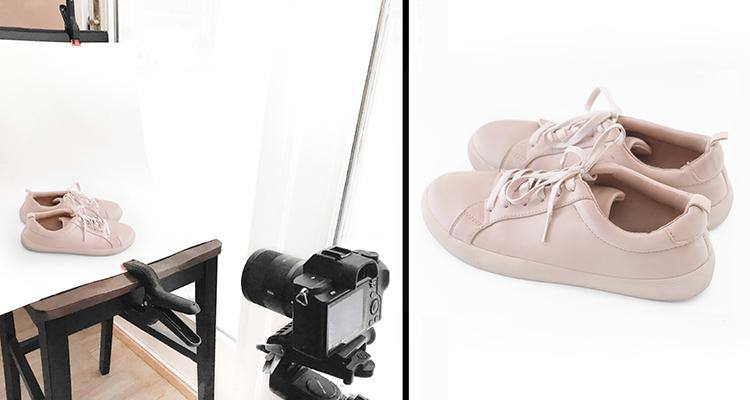
The most crucial function of every photography setup is the lighting, and it's also the hardest to get right.
In that location really is no quick set up, or one size fits all solution. Different products volition require different lighting, and information technology'south upward to you lot to figure out what works best for your products. One time you get a handle on the nuts, it'll be a example of trial and mistake until you find the perfect formula. We're going to focus specifically on natural lighting.
Natural lighting through a window is the ideal solution for a few reasons. Kickoff and foremost, anybody has access to a window. 2nd, natural lighting coming through a window has a unmarried management. This generates natural shadows, creating a 3D event past adding texture to your production, bringing it to life.
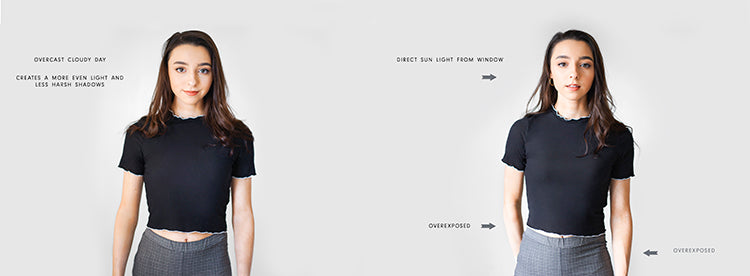
When shooting side by side to a window, you want to shoot when the mean solar day is brightest. Take a await at the weather. Is it a full sunny day or is it an overcast day? To accomplish the look you're going for, full sunlight might not exist what you demand. This is where practice, and figuring out what look you prefer comes into play. As y'all can meet below, shooting with natural lighting tin can make quite a divergence in the highlights and shadows of your photo.
2. Harness natural lighting
Great natural lighting is essential to achieving perfectly divers images. By decision-making the shadows created from natural lite, you can add an chemical element of interest to your production photos.
But one of the most anticipated things about mother nature is that it's unpredictable, and so natural lighting is likewise, often changing from one minute to the adjacent. Yous need to be prepared for every eventuality.
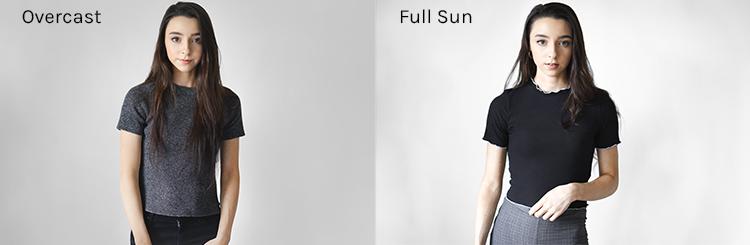
As the sun changes and moves throughout the 24-hour interval, information technology affects the way the natural lite shines through the window. Finding the best calorie-free to shoot your product photos tin be a challenge at the best of times. Proceed an eye on how the light changes throughout the mean solar day to figure out when the sweetness spot is for that particular location.
There are iii terms you should know when illuminating your subject with natural lighting:
- Forepart-lit is when indirect natural light hits a product head-on.
- Backlit is when it hits your subject area from behind.
- Side-lit is when the light comes from either side of the product.
Whatever angle of lighting you prefer, it's important to notation that each one casts a shadow on the opposite side.
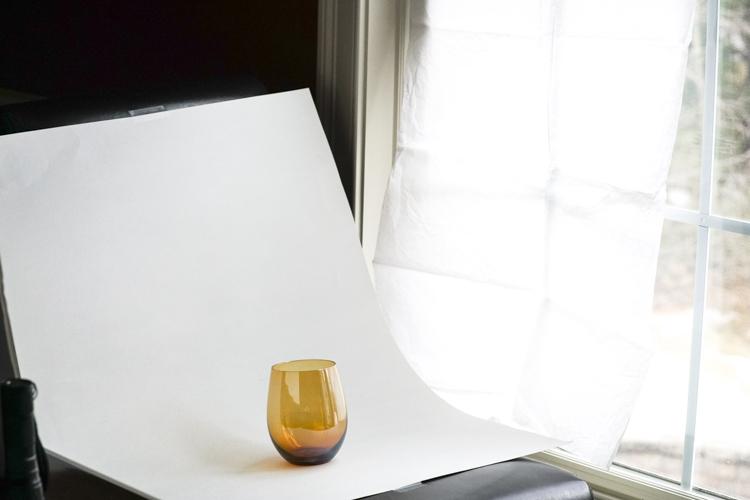
To become started using natural light, place a tabular array or chair next to a large window and prop a sweep (a big white sheet) against the wall. This volition provide only the right combination of practiced lighting and soft shadows. The trick is to avoid direct sunlight as it will result in night, unsightly shadows.
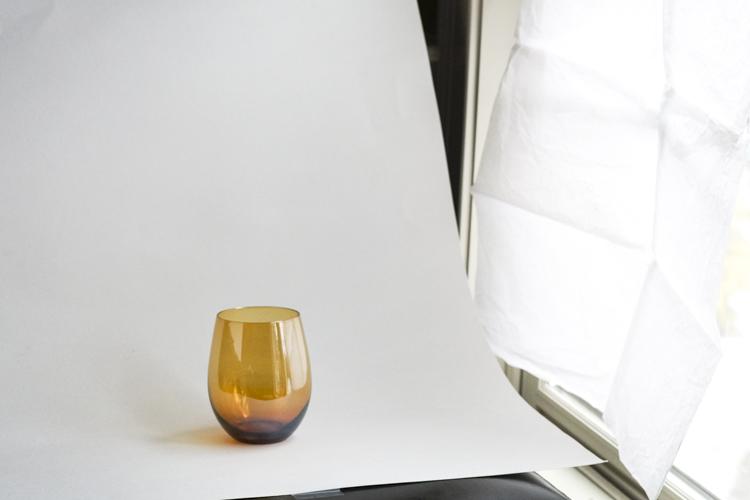
If the lord's day is too strong, you don't need to completely bit a photo shoot. Instead, hold a sparse white sheet, known as a diffuser, confronting the window to diffuse and soften the light to create a less harsh effect. Avoid hard light at all costs every bit it oftentimes makes colors await more than saturated, and volition highlight fifty-fifty the most minuscule flaw not visible to the naked centre.
How to use a reflector to fill in shadows
If the dominicus of a sudden decides to hide behind the clouds, causing the level of natural light to drop, make certain yous have a reflector on hand to bounciness and intensify light to fill up shadows. A reflector can be a white cream board or any white screen. Y'all can choice upward white foam boards from just about any craft shop or choice up a reflector on Amazon.
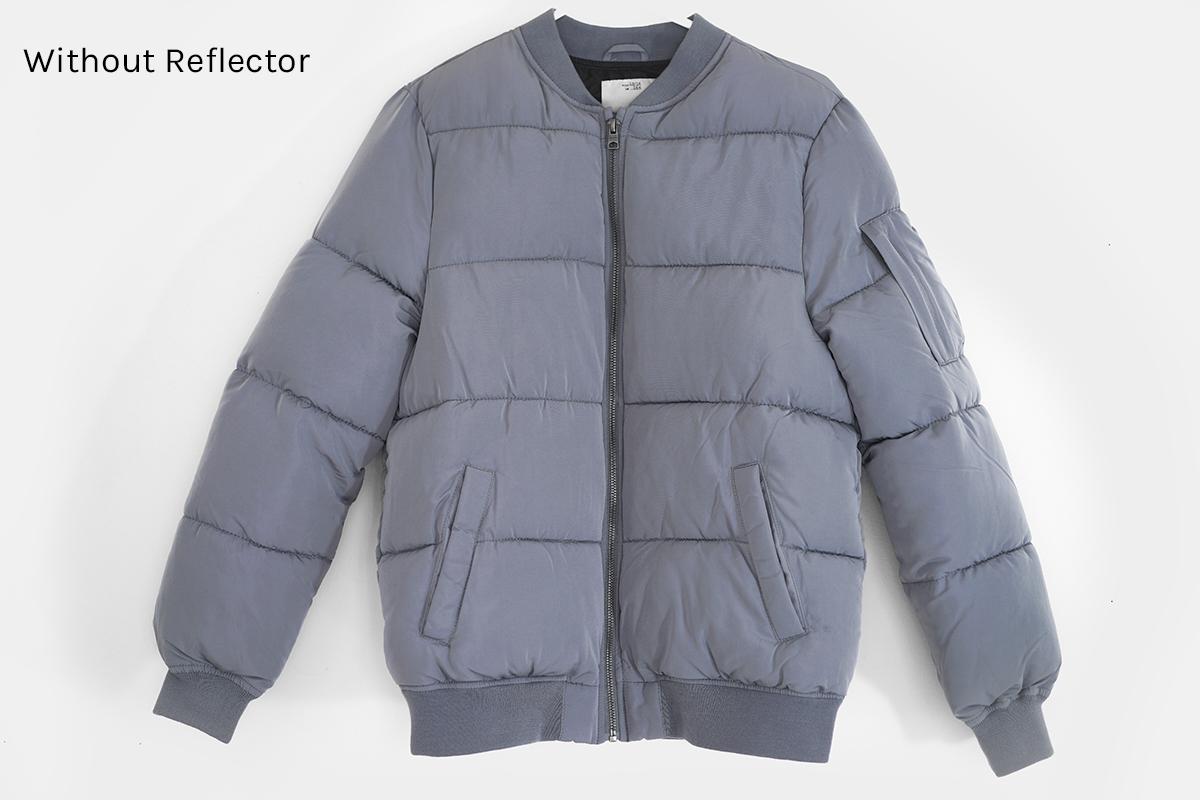
Without enough natural lite, the shadows from the creases on this jacket stand out.
If yous're using a reflector for the offset time, you can control the amount of natural light that bounces back past moving your reflector either further away or closer to your product. Using a white surface helps reflect natural light from the sun dorsum onto the product.
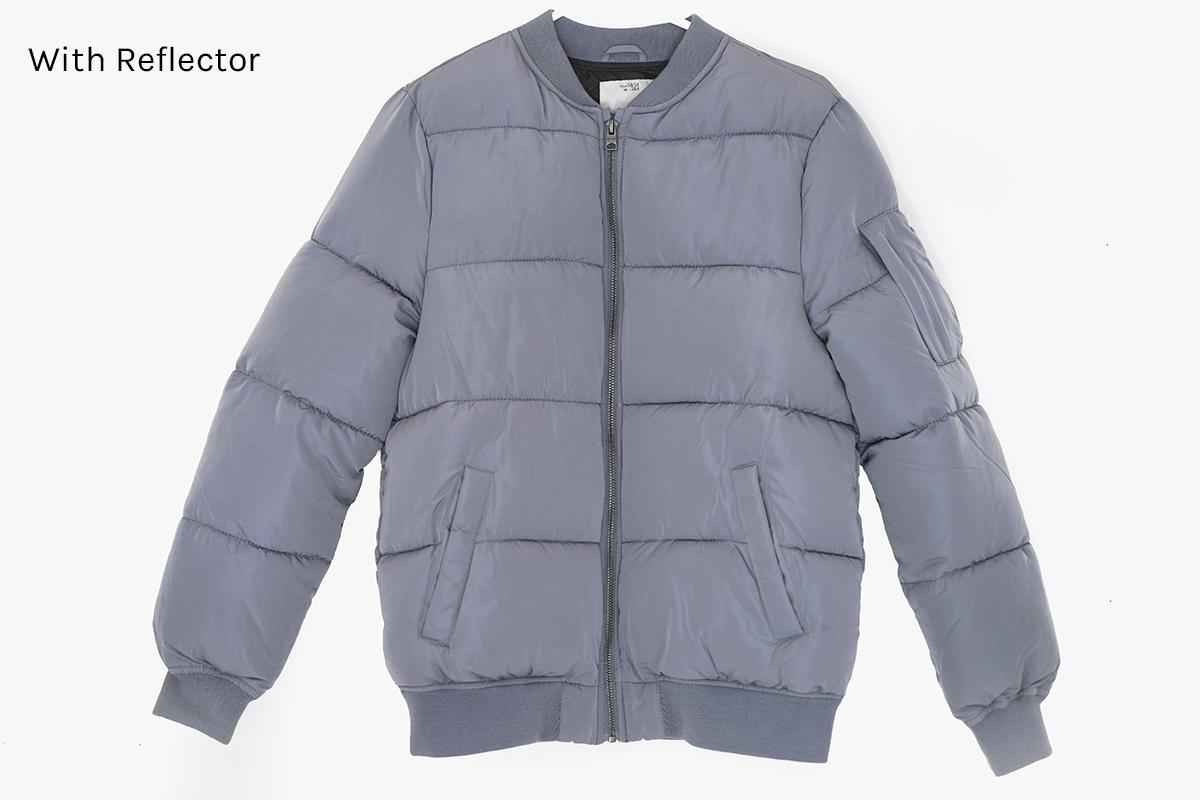
With a reflector, the creases become less prominent equally the shadows are filled in by natural low-cal.
Watch where the light is coming from, and bounce the light in the reverse direction. You lot should shoot direct next to your light source at a xc-degree angle, then reflect that light back onto the discipline. This will requite your image every bit much lite equally possible while also eliminating every bit much shadow every bit possible.
For my fashion photography model shots, I always continue the window to the right and my reflector to the left. This helps bounce the low-cal to places where there was little to no light, giving a much softer finish to the photo.
Don't be afraid to play with the angle of the reflector to notice the right balance between shadows and lighting. When shooting a backlit product, try placing the reflector in front end of the product so the natural light can bounce back onto it.
Side-lit products can produce particularly harsh shadows, so make sure yous have your trusty reflector on hand, allowing the light to bounciness back on the shadows and soften them.
3. Set up your product background
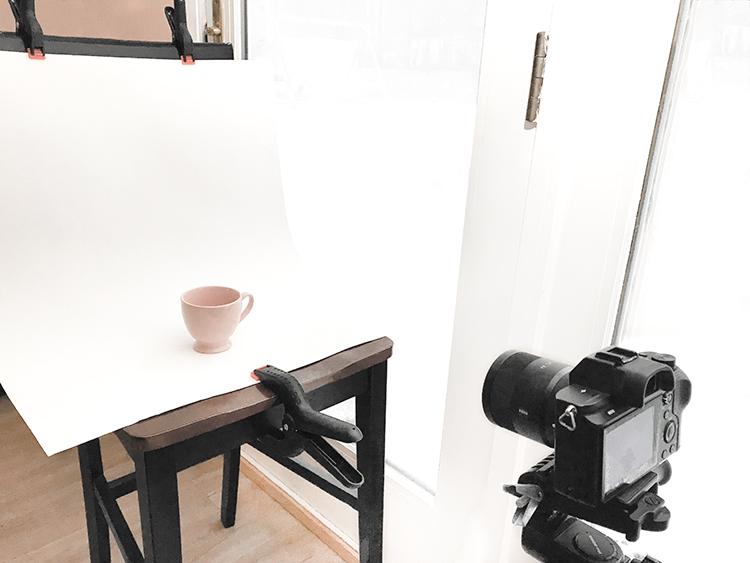
When shooting product photography, yous're going to demand an open up space for setting up your backdrop: another essential element to achieve peachy photos using natural lighting.
Your properties should always exist white, as white reflects natural light onto the product resulting in an evenly lit photo. A white backdrop is particularly helpful in the editing procedure, every bit information technology makes it much easier to remove the groundwork.
When shooting smaller products, you lot can either shoot on a table with a big canvass of white paper taped to the wall backside the product. Or you can push a chair up confronting the wall nether a large window. Record or clench a large canvas of white newspaper either to the top of the chair or the wall, depending on what angle you lot want to shoot from.
If you're shooting bigger objects, buy a whorl of white wallpaper and tape a few long strips to the wall. You could even utilise a big white canvass and allow gravity take care of the remainder.
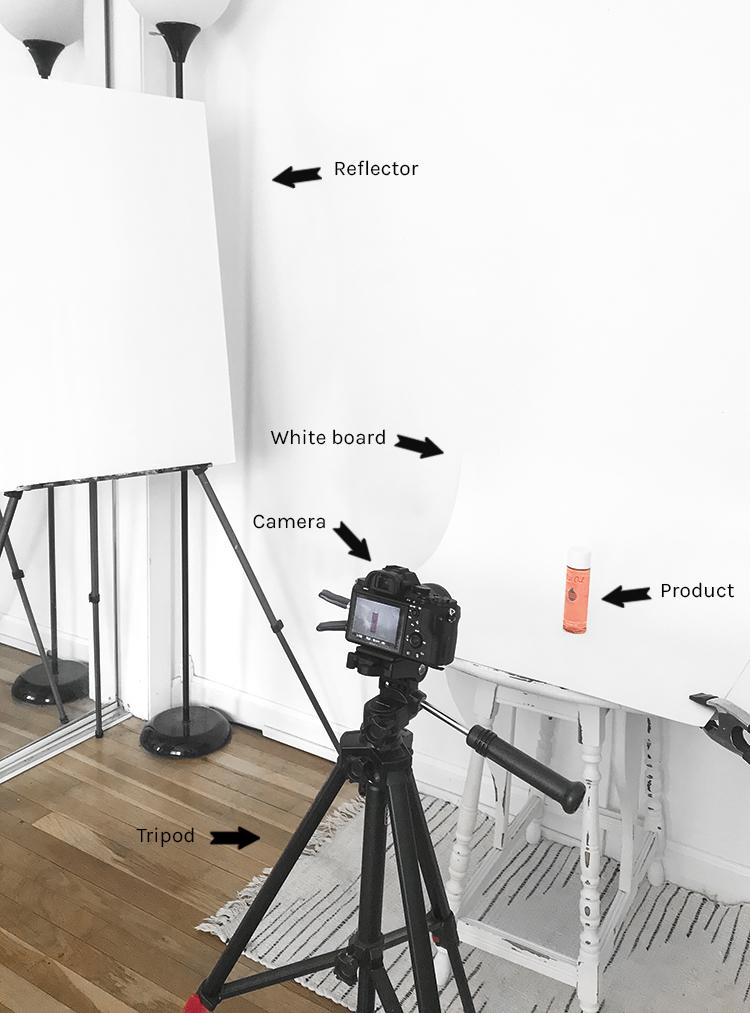
Every bit you can run across, I'm shooting against a white wall, leaving plenty of room for a reflector and camera. I used a sturdy piece of white paper and bent it into a slightly curved shape. This helps make the background look seamless and allows the light to bounciness back onto the product.
To secure the paper, I clamped it downwardly with some leap clamps from a local hardware store. If you don't have any clamps, you could ever just record the paper to the wall and record the bottom to the ground, creating a slight curve in the paper.
It'south essential to secure your properties to ensure aught moves during the photography process. This helps achieve consistent results; fifty-fifty the smallest change will affect the reflections and shadows.
4. Explore dissimilar photographic camera angles
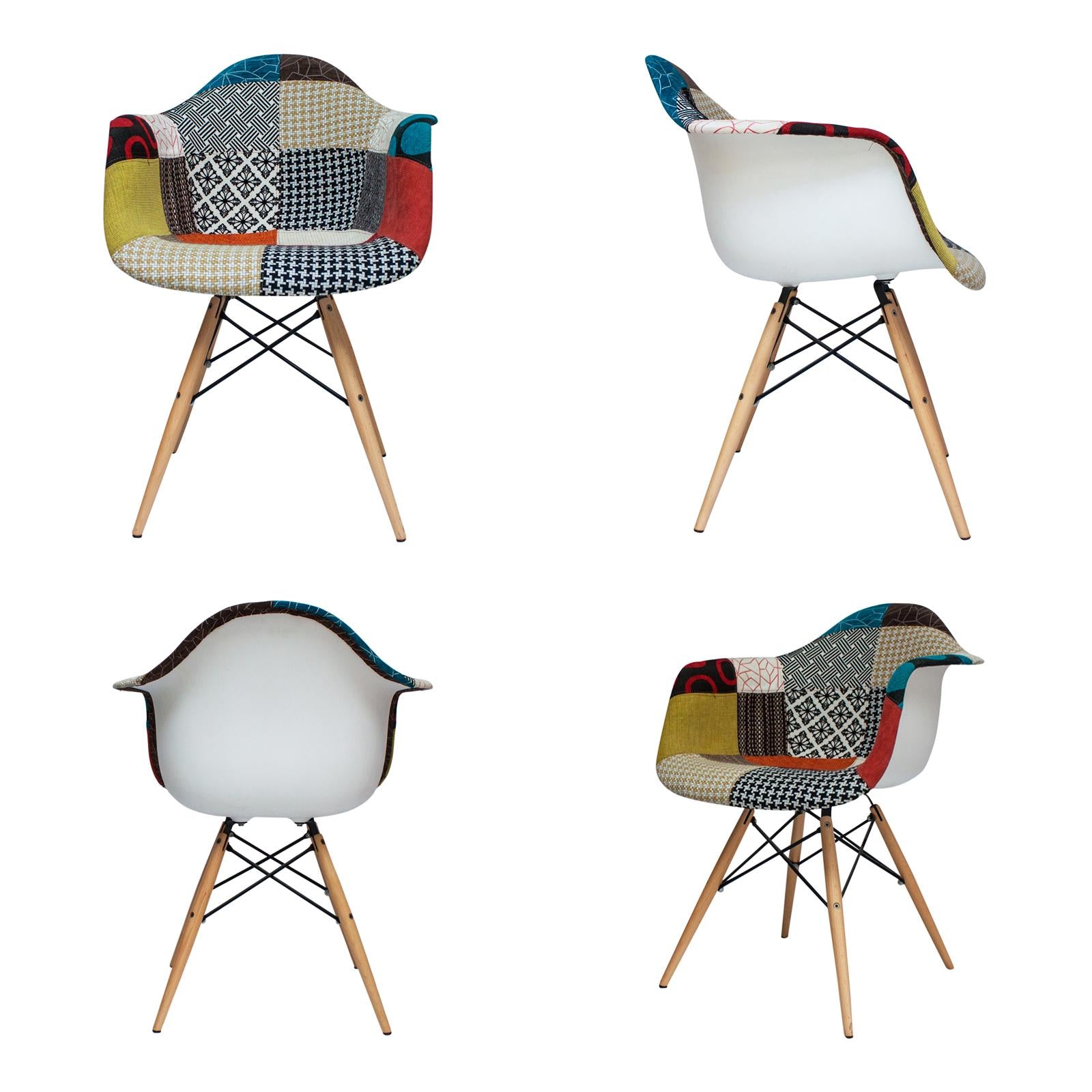
Through your product photos, you need to visually answer whatever questions that your product descriptions don't fully explain. That'due south why having a diversity of camera angles is so important.
Give customers as many different perspectives to help showcase the primal features of your product. The ultimate goal is to shoot your production from every angle, giving customers a 360 degree view of the product. Providing an accommodating view is significantly more engaging as you're visually providing extra product information, helping customers moving picture themselves using or wearing your product.

Past taking production shots from different angles, you lot'll also inject some character and creativity into your photos. Every bit a rule of thumb, your main hero image should be an center-level head-on view of your product. Information technology's recommended to have anywhere up to 12 boosted supporting images highlighting the nigh important features.
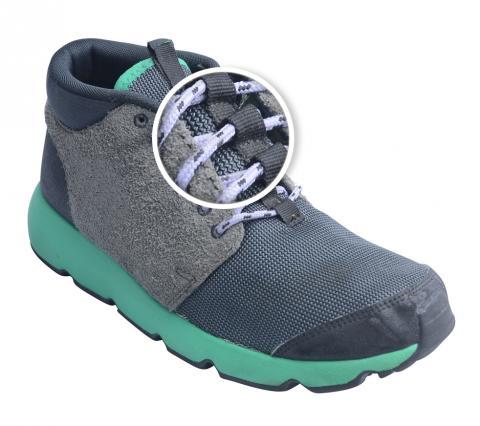
If you're not sure what features you should capture, focus on features that showcase the quality of your production. Take close-ups of the fabric, print detail, texture, or fifty-fifty your products being put to use. Exist sure to highlight the more detailed elements of your product that customers might want to inspect.
For anyone getting started with product photography, it'southward highly advisable to move the production effectually rather than moving your photographic camera. Proceed your camera and tripod in the aforementioned spot, and alter the angle of your product instead of having to motility your camera. Proceed the product in roughly the aforementioned place each fourth dimension, just rotating its position. This ways your final shots will all be framed the same. And y'all'll maintain consistency, reducing postal service-photography editing.
For anyone with a chip more than experience or fifty-fifty those with a very steady hand, you could play around with a diverseness of tripod-complimentary photographic camera angles. Endeavour shooting the product from in a higher place instead of straight in forepart. Shooting from above allows you to include more items in your photograph. This is particularly useful when you lot want to showcase a product line or in-context photo. Or why not take a go at shooting from a low angle, making the product wait bigger?

These are the main photographic camera angles yous should be enlightened of and experiment with in your photograph shoot:
- Eye-Level: Shows the product exactly the way we see it in reality. This is recommended for your hero epitome.
- Loftier Bending: Shows the product from above, as if y'all're looking down at it from an bending.
- Depression Angle: Shows the product from below, every bit if you're looking upwards at the product.
- Bird'southward Eye: Shows the product straight from to a higher place, as if you're standing over the production.
- Slanted: Shows the production from one side, every bit if you're looking side-on at the product.
v. Apply your camera's manual settings
The dazzler of using a professional camera to shoot is that you lot tin command every single attribute of the photograph through various settings. But before yous even get started with settings, you lot need to get your tripod set up. Using a tripod is essential to getting the most out of your photographic camera settings. For those who don't have a tripod, a stack of books will do.
A tripod is necessary because it provides stability, minimizing tiny movements that tin can ruin a great photo. I'd recommend you make sure your tripod is in line with the product you're shooting, as this makes it easier when tweaking the settings as you take photos.
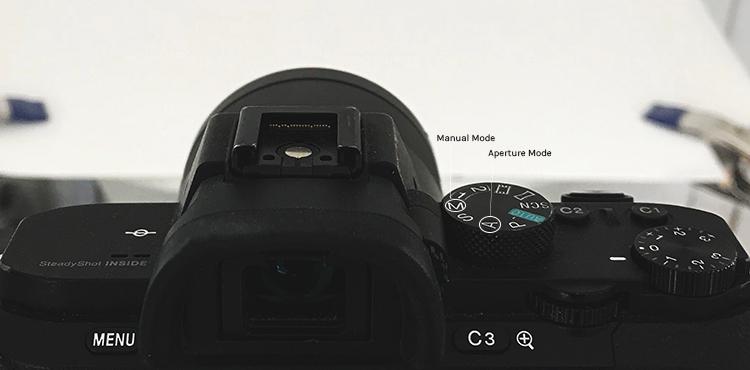
To achieve the best results, I'd recommend always shooting in manual style. Mastering manual fashion lets yous adapt to your environs, whether it's outdoors or an indoor studio, and shoot peak-notch photos in a variety of lighting conditions.
Shooting in transmission mode gives yous the power to control all settings, without worrying about the wrong automated setting being used, like the flash. The main settings you should master to brand the near of natural lighting are:
- Aperture
- ISO
- White rest
- Shutter speed
Aperture
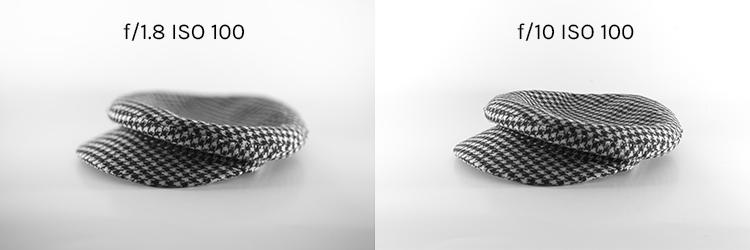
Get-go, we'll await at aperture. I'd recommend you use a higher f-stop because it helps continue every detail in focus. I prefer to shoot between f/8 and f/fourteen as this keeps the unabridged production in focus without losing too much low-cal.
If you want to make certain the entire product is in focus, utilize a setting higher up f/12. Some cameras may not go that high, and then but utilise the highest setting available. Ultimately, the higher the aperture the clearer the final photo will be.
ISO
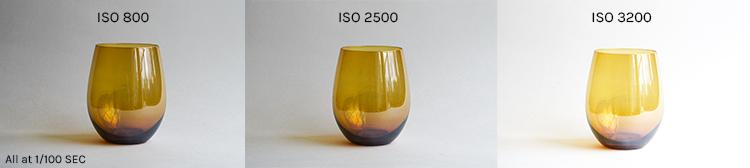
Side by side, let's get to grips with ISO. The ISO setting manages the camera's reaction to light. The lower your ISO, the less sensitive the photographic camera is to light and the higher the image quality. But when the ISO setting is too high, images start to await grainy or pixelated. When shooting in a night environs, a higher ISO is needed, simply the goal is to find a skilful remainder between improving the lighting and the epitome quality.
Once yous get the right ISO setting co-ordinate to your surroundings, you'll reach beautifully crisp product photos. My studio has fantabulous natural lighting, so I usually stick to an ISO between 300-500 depending on the weather exterior. On a particularly cloudy twenty-four hours, I turn my ISO up high to warm the sensors up and then adjust it until the prototype is prissy and clean.
White residue

Choosing the right white balance will mean your photographic camera accurately adjusts according to the colour of your product in conjunction with the lite. For beginners, you probably want to use the automatic white balance setting, then the photographic camera automatically chooses the right setting co-ordinate to the lighting.
One time you commencement getting a scrap more confident with your camera settings, I'd advise you lot manually select the white remainder setting that most accurately reflects what you run into. The goal is to get equally shut a match between what you meet in your camera viewfinder and your optics. Despite being a huge amplifier of natural lighting, it does take some getting used to and adjustments.
A sudden increase in sunlight or even particularly harsh sunlight tin can leave your images being overexposed. An overexposed prototype is tough to correct in post-photography editing—especially if you're using a complimentary photo editing software—equally the detail is not well-baked enough due to the harsh lighting. Follow the communication above well-nigh harnessing natural light , and you'll have no problem working around information technology.
Shutter speed
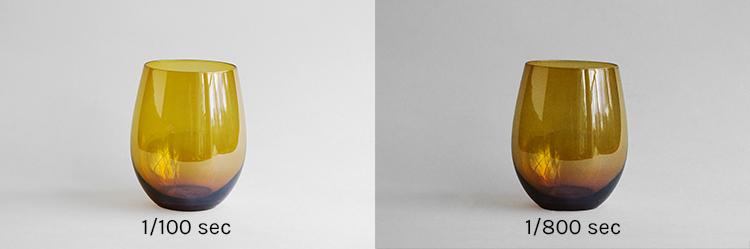
When you've set the aperture, ISO and white remainder, you lot tin finally prepare your shutter speed. The shutter speed will decide how long the shutter is open when taking photos. Longer shutter speeds help the camera pick upwards more light, which makes for a beautifully crisp photo.
My top tip for getting the most of your shutter speed, and all the photographic camera settings, is to use a tripod. Keeping the camera stable allows all the settings to piece of work together cohesively, leaving the camera'due south internal light meter to do its piece of work, resulting in moving picture perfect product photos.
Transmission settings for a smartphone camera
At that place's no denying that using a professional camera is the ideal solution when taking production photos. But, don't let that hold y'all dorsum. Smartphone technology is advancing year over year, and most of them have excellent congenital-in cameras. At the very least you tin can take some good-quality photos, and leave the residue up to editing.
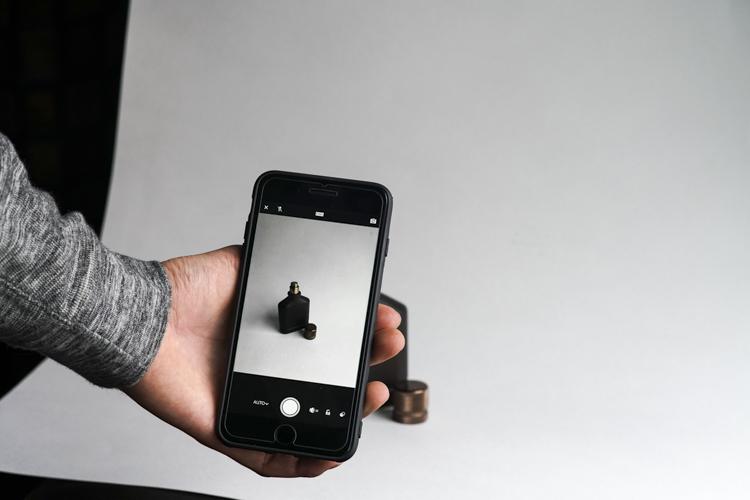
A few key tips when shooting product photos with your smartphone:
- Avoid the zoom characteristic every bit this significantly reduces the quality of the paradigm
- Avoid blurry photos by investing in a tripod for your smartphone
- Avoid the selfie photographic camera every bit the front end camera is non equally good at the dorsum camera
- Avoid using the flash equally this will overexpose your photo and distort the colors
- Avert distracting or dark background, always shoot against a plain white background
- Avert over editing every bit this reduces the quality of the photo, minor adjustments only
How to take amazing product photos at home
In this video, you will learn how to take product photography at home with a cellphone and on a budget.
Numerous apps can assist you lot get results similar to a DSLR camera. The one I often recommend is Lightroom CC. Inside this app, you lot tin can command settings such equally file format, choosing between JPEG and DNG. DNG provides more information about the image and produce a better quality photograph. The downside of using DNG is that it takes upwards more storage infinite on your device.
Other factors you lot tin adjust are aspect ratio, timer, grids, and levels, likewise as highlight clipping, which shows yous precisely what is overexposed in the image. In one case yous've taken your images, y'all can arrange color, exposure, tone, and dissimilarity within Lightroom CC.
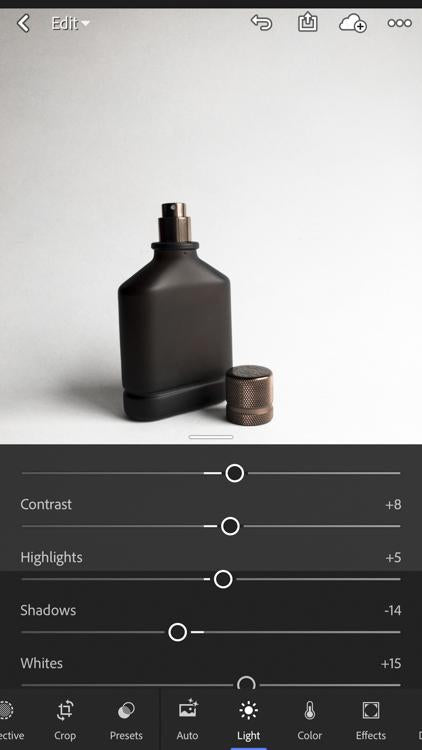
I recommend that yous downloaded Lightroom CC on your desktop so that you tin sync your photos betwixt your desktop and mobile app. I prefer editing photos on the desktop version as I accept a bigger screen and tin get a closer look at what needs to be fixed.
half-dozen. Shoot your product photos
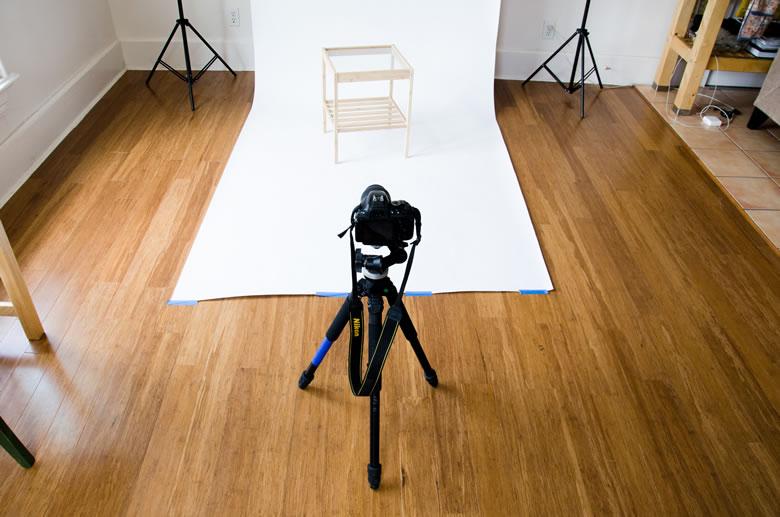
Now that you've got everything ready, information technology'south time to kickoff taking photos. Undoubtedly you'll accept to accommodate things throughout the shoot, but practice makes perfect. Have fun and embrace your creativity. Shoot lots of photos in a variety of different angles, making a note of the settings you used and what they produced.
Have fourth dimension betwixt different angles to review the images to see if you need to adjust any settings. If you have fourth dimension, I'd suggest you upload them to your laptop or computer throughout the shoot and so you tin can become upwardly close and personal. One time you've chosen the best photos, information technology's time to edit.
To larn more about the nuts of photo editing, check out this section of Shopify'southward DIY Production Photography Guide.
About the writer: Rachel Jacobs is Head of Content and Partnerships at Pixc, a leading eCommerce product optimization service. Pixc transforms average production photos into professional images designed to increase conversions.
0 Response to "Natural Light Fashion / Beauty Photography"
Post a Comment